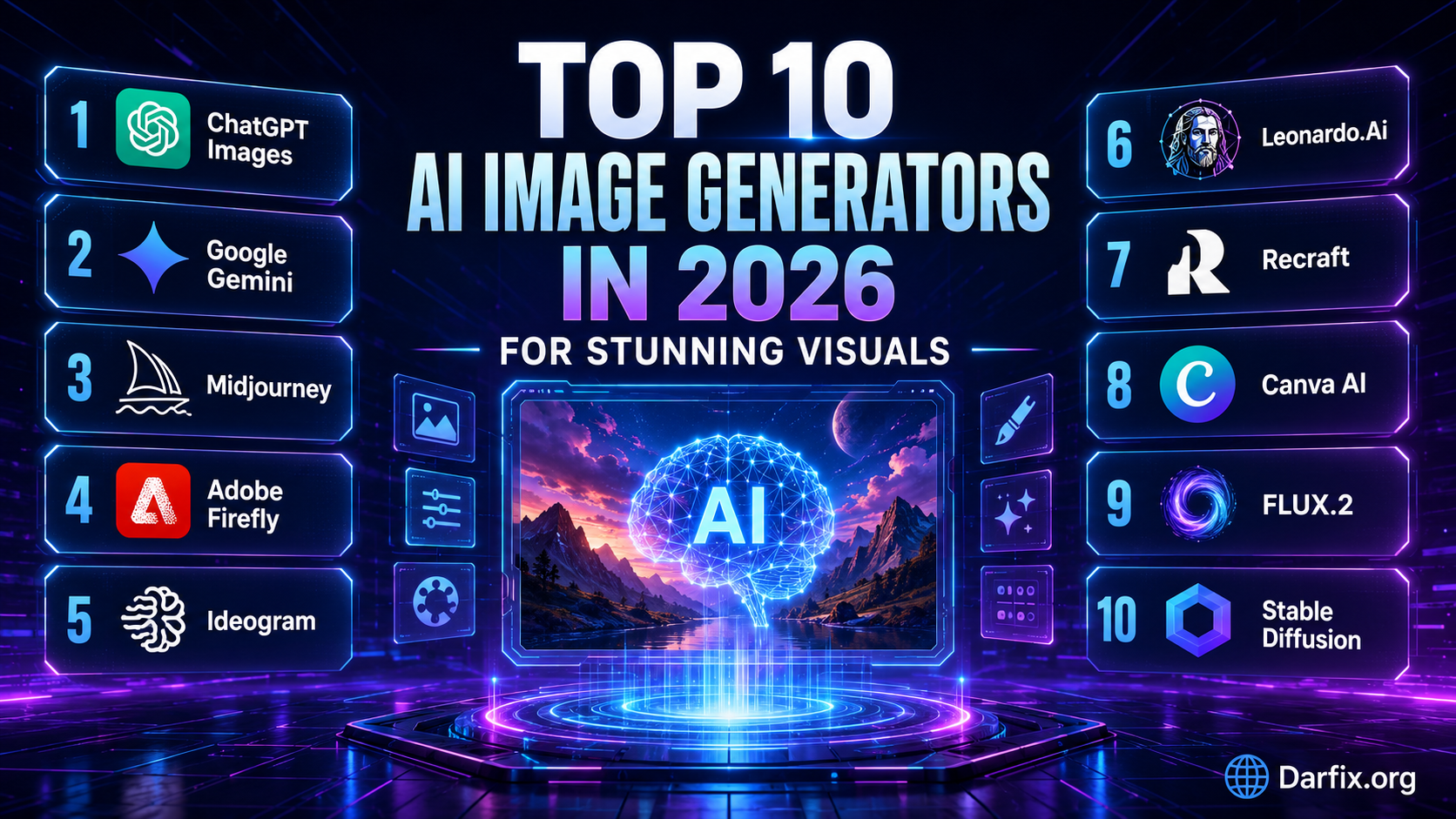
Top 10 AI Image Generators in 2026 for Stunning Visuals
Technology2 views2026-07-28
Artificial intelligence has completely changed the way images are created. In 2026, users no longer need advanced photography or graphic design skills to produce professional illustrations, realistic photos, advertising visuals, posters, thumbnails and concept art.
Modern AI image generators can turn a short written description into a detailed visual within seconds. Many of them can also edit existing photos, replace objects, expand backgrounds, improve image quality and maintain consistent characters across multiple scenes.
However, every platform has different strengths. Some tools are designed for realistic photography, while others are better for artistic images, typography, branding, vector graphics or professional editing.
Here are ten of the most powerful AI image generators to know in 2026.
1. ChatGPT Images
ChatGPT Images provides a conversational way to create and edit visuals. Users can describe an idea in natural language, generate an image and then request specific changes without writing an entirely new prompt.
The platform is particularly useful for creating website covers, social media graphics, advertisements, infographics, illustrations and images containing readable text. Users can also upload existing pictures and ask ChatGPT to remove objects, change backgrounds, adjust colors or transform the visual style.
ChatGPT is a strong choice for users who want both image generation and intelligent editing in one simple workspace.
2. Google Gemini and Nano Banana Pro
Google Gemini offers advanced image generation and editing through its visual AI models, including Nano Banana Pro. It can create realistic scenes, illustrations, diagrams, product images and designs from detailed instructions.
One of its most useful capabilities is conversational image editing. Users can upload an image and request changes while preserving important elements such as the subject, composition or visual identity.
Gemini is particularly suitable for users who already work with Google products and need an AI assistant that can understand text, images and other forms of information together.
3. Midjourney
Midjourney remains one of the most popular platforms for producing cinematic, artistic and visually impressive images. It is especially strong at lighting, atmosphere, composition, fantasy environments, character concepts and editorial artwork.
Users can control the aspect ratio, visual style, level of detail and creative variation of each result. Midjourney also provides personalization features that help the system understand the visual preferences of each creator.
It is an excellent option for digital artists, game designers, filmmakers, advertising teams and creators who prioritize visual beauty.
4. Adobe Firefly
Adobe Firefly is an AI creative platform for generating and editing images, graphics, video and audio. Its close integration with applications such as Photoshop and Illustrator makes it particularly valuable for professional designers and creative teams.
Firefly includes tools for text-to-image generation, generative fill, background replacement, object removal, image expansion and vector creation. Users can generate new elements and insert them directly into an existing design.
It is a practical choice for commercial design workflows, marketing campaigns, product visuals and professional photo editing.
5. Ideogram
Ideogram is widely recognized for creating images that contain accurate and readable text. This makes it especially useful for posters, advertisements, logos, book covers, social media graphics and YouTube thumbnails.
The platform can combine typography with realistic photography, illustrations or graphic design. It also offers tools for editing images, removing backgrounds, reframing compositions and generating transparent elements.
Ideogram is one of the strongest choices when written words must appear clearly inside an AI-generated image.
6. Leonardo.Ai
Leonardo.Ai is a complete visual creation platform for generating images, artwork, game assets, product designs and marketing content. It provides multiple AI models and detailed controls for different creative styles.
Users can generate realistic photos, fantasy characters, environments, illustrations and concept art. Existing images can also be edited, expanded, enhanced or transformed into short animations.
Leonardo.Ai is particularly useful for game developers, designers, content creators and businesses that need many visual assets with a consistent style.
7. Recraft
Recraft is designed for professional graphics, branding and visual design. Unlike many generators that focus mainly on photographs, Recraft can produce vectors, icons, logos, illustrations, mockups and advertising materials.
Its tools allow creators to generate coordinated visual assets, maintain consistent brand colors and prepare scalable graphics for websites, applications and printed products.
Recraft is a strong option for graphic designers, branding specialists, online stores and interface designers.
8. Canva AI
Canva AI brings image generation directly into Canva’s popular design environment. Users can create a visual and immediately place it inside a presentation, poster, advertisement, website banner or social media post.
Canva provides tools such as Magic Media, Dream Lab, Magic Edit and Magic Expand. These features can generate images, modify parts of a photograph, extend backgrounds and help users create complete designs from a simple idea.
It is one of the easiest choices for beginners, social media managers, students, small businesses and people who want ready-to-publish content.
9. FLUX.2
FLUX.2 is an advanced image-generation and editing model developed by Black Forest Labs. It is designed to produce detailed images with strong prompt accuracy, realistic textures and professional visual quality.
The model supports text-to-image creation, image editing and workflows that use multiple reference images. This makes it useful for product visualization, advertising, character consistency and complex creative projects.
FLUX is also popular among developers because different versions can be integrated into applications or used in custom image-generation workflows.
10. Stable Image and Stable Diffusion
Stability AI provides several image-generation services through the Stable Image and Stable Diffusion ecosystem. These models can generate images from text, edit specific areas, remove objects, expand backgrounds and enhance low-resolution pictures.
Stable Diffusion is especially important for advanced users and developers who want greater technical control over their image-generation workflow. Depending on the selected model and license, it may also be used through APIs or installed in custom environments.
It is a strong choice for developers, researchers, studios and creators who want flexible image-generation tools.
Which AI Image Generator Should You Choose?
The best platform depends on the type of image you want to create.
ChatGPT Images and Google Gemini are excellent for conversational creation and editing. Midjourney is ideal for cinematic and artistic visuals, while Adobe Firefly is designed for professional creative workflows.
Ideogram is a strong choice for images containing text. Leonardo.Ai is suitable for game assets and concept art, Recraft specializes in vectors and branding, and Canva AI makes it easy to produce complete social media and marketing designs.
FLUX.2 and Stable Diffusion provide advanced options for developers and users who need more control over their image-generation systems.
Professional creators often combine several tools. For example, they may generate a cinematic background with Midjourney, create readable typography with Ideogram, edit the final composition in Adobe Firefly and assemble the finished advertisement in Canva.
Before publishing AI-generated images, users should review the output carefully, check the platform’s commercial-use terms and avoid using protected brands, copyrighted characters or real people in misleading ways.
AI image generators cannot replace human creativity, but they can help creators experiment faster, reduce production time and transform ideas into professional visuals more efficiently.
Modern AI image generators can turn a short written description into a detailed visual within seconds. Many of them can also edit existing photos, replace objects, expand backgrounds, improve image quality and maintain consistent characters across multiple scenes.
However, every platform has different strengths. Some tools are designed for realistic photography, while others are better for artistic images, typography, branding, vector graphics or professional editing.
Here are ten of the most powerful AI image generators to know in 2026.
1. ChatGPT Images
ChatGPT Images provides a conversational way to create and edit visuals. Users can describe an idea in natural language, generate an image and then request specific changes without writing an entirely new prompt.
The platform is particularly useful for creating website covers, social media graphics, advertisements, infographics, illustrations and images containing readable text. Users can also upload existing pictures and ask ChatGPT to remove objects, change backgrounds, adjust colors or transform the visual style.
ChatGPT is a strong choice for users who want both image generation and intelligent editing in one simple workspace.
2. Google Gemini and Nano Banana Pro
Google Gemini offers advanced image generation and editing through its visual AI models, including Nano Banana Pro. It can create realistic scenes, illustrations, diagrams, product images and designs from detailed instructions.
One of its most useful capabilities is conversational image editing. Users can upload an image and request changes while preserving important elements such as the subject, composition or visual identity.
Gemini is particularly suitable for users who already work with Google products and need an AI assistant that can understand text, images and other forms of information together.
3. Midjourney
Midjourney remains one of the most popular platforms for producing cinematic, artistic and visually impressive images. It is especially strong at lighting, atmosphere, composition, fantasy environments, character concepts and editorial artwork.
Users can control the aspect ratio, visual style, level of detail and creative variation of each result. Midjourney also provides personalization features that help the system understand the visual preferences of each creator.
It is an excellent option for digital artists, game designers, filmmakers, advertising teams and creators who prioritize visual beauty.
4. Adobe Firefly
Adobe Firefly is an AI creative platform for generating and editing images, graphics, video and audio. Its close integration with applications such as Photoshop and Illustrator makes it particularly valuable for professional designers and creative teams.
Firefly includes tools for text-to-image generation, generative fill, background replacement, object removal, image expansion and vector creation. Users can generate new elements and insert them directly into an existing design.
It is a practical choice for commercial design workflows, marketing campaigns, product visuals and professional photo editing.
5. Ideogram
Ideogram is widely recognized for creating images that contain accurate and readable text. This makes it especially useful for posters, advertisements, logos, book covers, social media graphics and YouTube thumbnails.
The platform can combine typography with realistic photography, illustrations or graphic design. It also offers tools for editing images, removing backgrounds, reframing compositions and generating transparent elements.
Ideogram is one of the strongest choices when written words must appear clearly inside an AI-generated image.
6. Leonardo.Ai
Leonardo.Ai is a complete visual creation platform for generating images, artwork, game assets, product designs and marketing content. It provides multiple AI models and detailed controls for different creative styles.
Users can generate realistic photos, fantasy characters, environments, illustrations and concept art. Existing images can also be edited, expanded, enhanced or transformed into short animations.
Leonardo.Ai is particularly useful for game developers, designers, content creators and businesses that need many visual assets with a consistent style.
7. Recraft
Recraft is designed for professional graphics, branding and visual design. Unlike many generators that focus mainly on photographs, Recraft can produce vectors, icons, logos, illustrations, mockups and advertising materials.
Its tools allow creators to generate coordinated visual assets, maintain consistent brand colors and prepare scalable graphics for websites, applications and printed products.
Recraft is a strong option for graphic designers, branding specialists, online stores and interface designers.
8. Canva AI
Canva AI brings image generation directly into Canva’s popular design environment. Users can create a visual and immediately place it inside a presentation, poster, advertisement, website banner or social media post.
Canva provides tools such as Magic Media, Dream Lab, Magic Edit and Magic Expand. These features can generate images, modify parts of a photograph, extend backgrounds and help users create complete designs from a simple idea.
It is one of the easiest choices for beginners, social media managers, students, small businesses and people who want ready-to-publish content.
9. FLUX.2
FLUX.2 is an advanced image-generation and editing model developed by Black Forest Labs. It is designed to produce detailed images with strong prompt accuracy, realistic textures and professional visual quality.
The model supports text-to-image creation, image editing and workflows that use multiple reference images. This makes it useful for product visualization, advertising, character consistency and complex creative projects.
FLUX is also popular among developers because different versions can be integrated into applications or used in custom image-generation workflows.
10. Stable Image and Stable Diffusion
Stability AI provides several image-generation services through the Stable Image and Stable Diffusion ecosystem. These models can generate images from text, edit specific areas, remove objects, expand backgrounds and enhance low-resolution pictures.
Stable Diffusion is especially important for advanced users and developers who want greater technical control over their image-generation workflow. Depending on the selected model and license, it may also be used through APIs or installed in custom environments.
It is a strong choice for developers, researchers, studios and creators who want flexible image-generation tools.
Which AI Image Generator Should You Choose?
The best platform depends on the type of image you want to create.
ChatGPT Images and Google Gemini are excellent for conversational creation and editing. Midjourney is ideal for cinematic and artistic visuals, while Adobe Firefly is designed for professional creative workflows.
Ideogram is a strong choice for images containing text. Leonardo.Ai is suitable for game assets and concept art, Recraft specializes in vectors and branding, and Canva AI makes it easy to produce complete social media and marketing designs.
FLUX.2 and Stable Diffusion provide advanced options for developers and users who need more control over their image-generation systems.
Professional creators often combine several tools. For example, they may generate a cinematic background with Midjourney, create readable typography with Ideogram, edit the final composition in Adobe Firefly and assemble the finished advertisement in Canva.
Before publishing AI-generated images, users should review the output carefully, check the platform’s commercial-use terms and avoid using protected brands, copyrighted characters or real people in misleading ways.
AI image generators cannot replace human creativity, but they can help creators experiment faster, reduce production time and transform ideas into professional visuals more efficiently.